

Early Years Toolbox with University of Wollongong
For over 7 years, we have handled all aspects of software development for Early Years Toolbox apps and the related data management and infrastructure. The Early Years Toolbox team had a vision, and required a suite of tools to be built. Since 2017, they brought us onboard, as an external extension of their team, to bridge and make their ideas into reality.
The Early Years Toolbox is a collection of accessible measures of young children's cognitive, self-regulatory, language, numeracy and social development. Here are some of the apps we've developed and maintain.
Roles
- iOS development, maintenance and support.
- Web application and database development.
iOS Apps

EYT Early Numeracy
EYT Early Numeracy is an iPad-based assessment of children’s emerging numeracy skills, including numerical language, spatial and measurement concepts, counting, matching digits and quantities, completing number lines, ordinality, subitising, patterning, numerical word problems and equations. The child helps a cartoon robot as he encounters each numerical problem.
Roles
- Design prototyping
- iOS design and development
- Maintenance and support
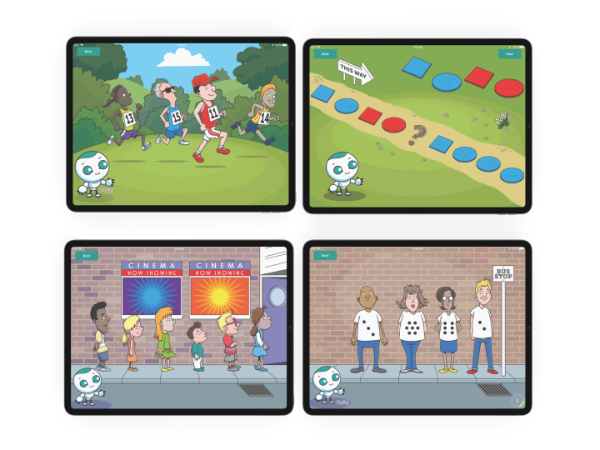

EYT Numbers 2
EYT Numbers 2 task is an iPad-based assessment of children’s emerging numeracy skills, including numerical language, spatial and measurement concepts, counting, matching digits and quantities, completing number lines, ordinality, subitising, patterning, numerical word problems and equations. The child helps a cartoon robot as he encounters each numerical problem.
Roles
- Design prototyping
- iOS design and development
- Maintenance and support
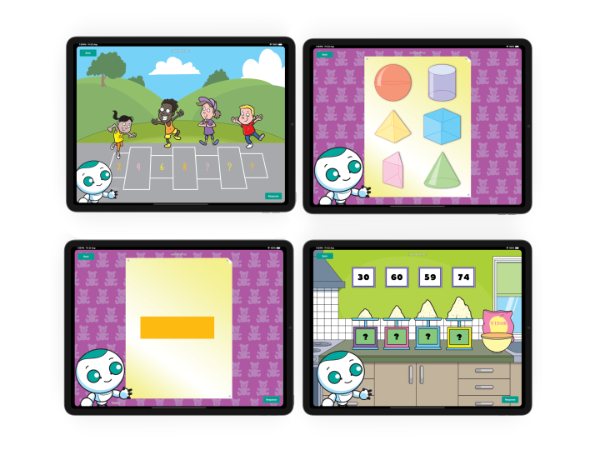

EYT Language
EYT Language is an iPad-based assessment of children's early receptive language development. It assesses children's developmental progress in areas of: phonology; emergent literacy; vocabulary; syntax; morphology; grammar; narrative; and more. The children help the main character solve the language problem she is facing.
Roles
- Design prototyping
- iOS design and development
- Maintenance and support

EYT Catch a Mole
EYT Catch-A-Mole is an iPad-based assessment of children's cognitive flexibility (i.e., ability to disengage from one task/rule and shift to another). In this game, children are tasked with protecting a veggie patch from moles trying to take the carrots.
Roles
- Design prototyping
- iOS design and development
- Character animation
- Maintenance and support

EYT PRSIST
EYT PRSIST is an observational assessment of children’s cognitive and behavioural self-regulation. For this assessment, children are engaged in a group activity (i.e., memory card game) and an individual activity (i.e., curiosity boxes guessing game), in which children’s behaviours are rated on key aspects of self-regulation (e.g., was the child self-directed, engaging in the activity with little prompting; did the child control their behaviours and stay within the rules of the activity).
Roles
- Design prototyping
- iOS design and development
- Maintenance and support
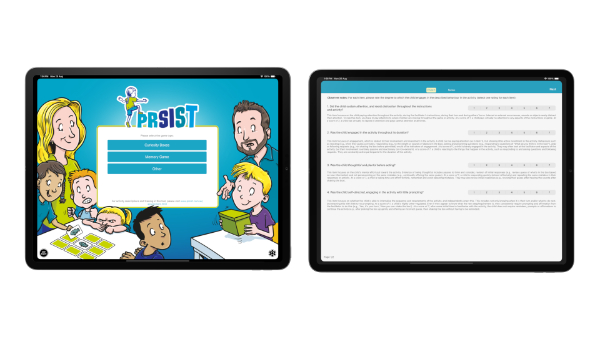

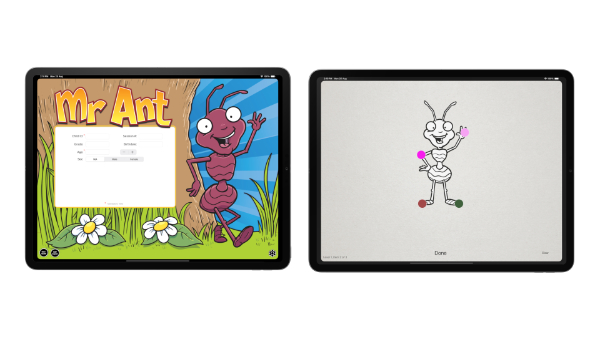
EYT Mr Ant
EYT Mr Ant is an iPad-based assessment of ‘visual-spatial working memory’ (i.e., the amount of visual information that concurrently can be coordinated in mind). In this game, children are presented with an image of a cartoon character – Mr Ant – who has a number of coloured stickers placed on different parts of his body. After a predetermined amount of time, these stickers disappear, and the child is then asked to recall the locations of the stickers by tapping the locations on Mr Ant they believe previously held stickers.
Roles
- Extensive further development of existing project
- Maintenance and support

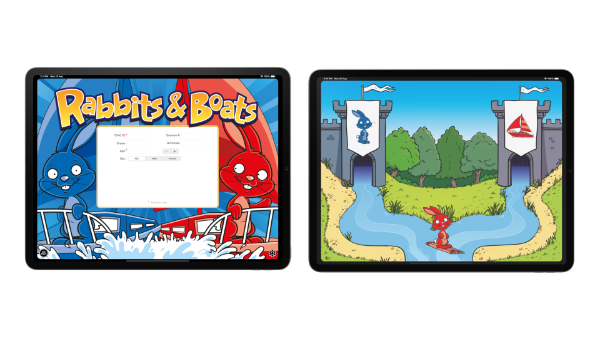
EYT Card Sort
EYT Card Sorting is an iPad-based assessment of 'shifting' (an executive function that involves the ability to control and redirect attention). In this game, children are presented with cards that vary along two dimensions (i.e., shape and colour) and are asked to sort each card (i.e., red rabbits and blue boats) first by one dimension (e.g., colour) and then, after a number of trials, by another dimension (e.g., shape). Their ability to flexibly shift from one sorting rule to another corresponds to their cognitive flexibility (or 'shifting').
Roles
- Extensive further development of existing project.
- Maintenance and support

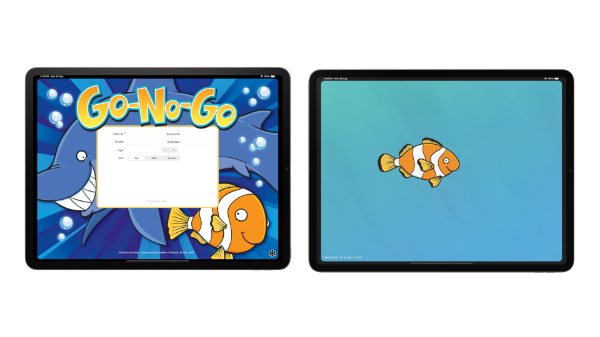
EYT Go No Go
EYT Go/No-Go is an iPad-based assessment of ‘inhibition’ (the ability to control behavioural impulses). In this game, children are presented with fish and sharks and are instructed to tap the iPad screen whenever they see a fish (‘catch the fish’) and refrain from responding when a shark appears (‘avoid the sharks’).
Roles
- Extensive further development of existing project
- Maintenance and support

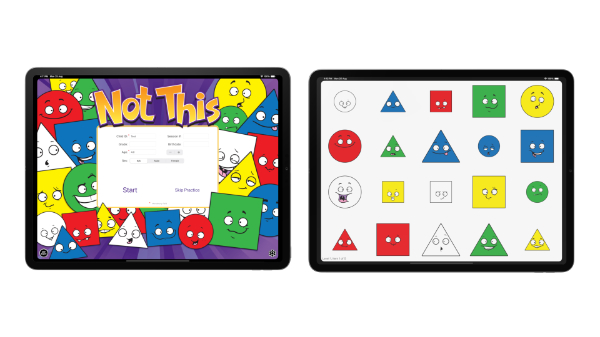
EYT Not This
EYT Not This is an iPad-based phonological working memory measure (i.e., the amount of auditory information that concurrently can be coordinated in mind). In this game, children are presented with an array of characters (i.e., shapes that have cartoon expressions on their faces) that vary in shape, size and colour (e.g., a large blue circle). Before the characters are shown, children hear an auditory instruction to point to a card that does not fulfil a certain descriptive quality (e.g., “Find a shape that is not red” or “Find a shape that is not a triangle and is not large”). For each level, the number of descriptive qualities that must be held in mind increases.
Roles
- Extensive further development of existing project
- Maintenance and support

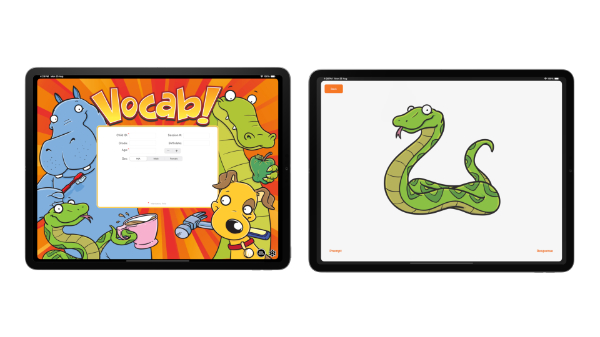
EYT Vocab
EYT Vocab is an iPad-based assessment of children’s ability to identify and name objects. In this game, children are presented with cartoon pictures of objects (e.g., flower, hammer) and are asked to verbally name each item.
Roles
- Extensive further development of existing project
- Maintenance and support

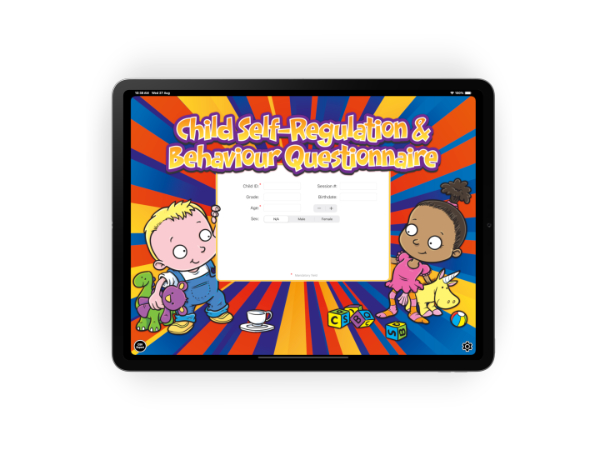
EYT CSBQ
EYT CSBQ is a parent- or educator-report questionnaire consisting of 34 items pertaining to children’s everyday self-regulatory and social behaviours (e.g., ‘persists with difficult tasks’ and ‘waits their turn in activities’).
Roles
- Extensive further development of existing project
- Maintenance and support
Web Apps

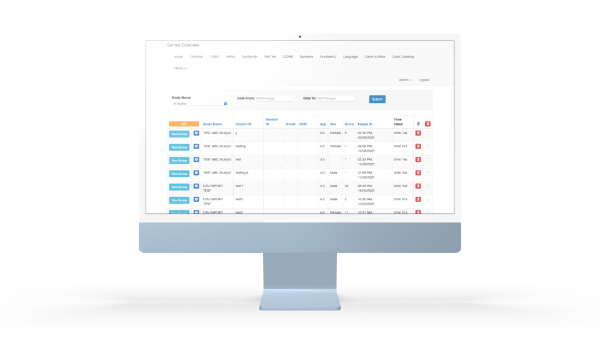
EYT Database
The EYT database is developed to collect and store results from the EYT apps.
Roles
- Extensive further development of existing project
- Web application and database design and development
- Infrastucture deployment
- Maintenance and support

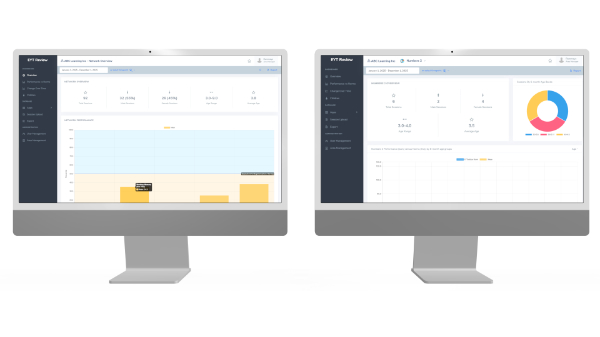
EYT Review
Roles
- Design prototyping
- Web application and database design and development
- Infrastucture deployment
- Maintenance and support
© Sockii Pty Ltd 2011 - 2026. All Rights Reserved. ABN 67 160 198 685
Apple, iPad, iPhone, iPod touch, and iTunes are trademarks of Apple Inc., registered in the U.S. and other countries. App Store is a service mark of Apple Inc. Google Play and the Google Play logo are trademarks of Google Inc.